

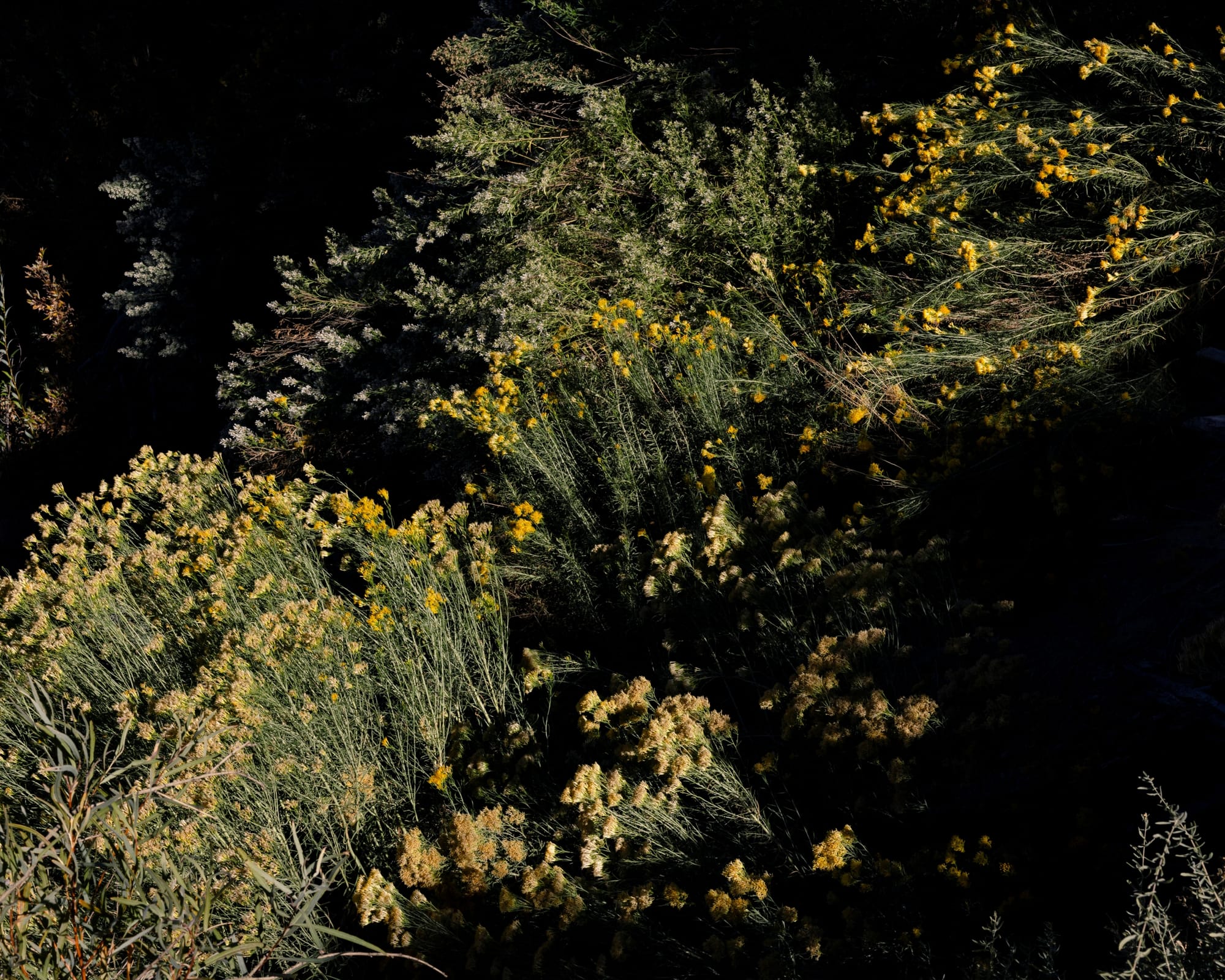
During a recent elk-bow hunt, a friend and I set out at 4:30 a.m. and hiked up a large mesa to a vantage point overlooking a wide canyon below. It had rained the night before, and we were washed in the scents of wet sage and pine. As the sun rose, its rays bursting above the horizon, we crouched and peered over a ledge at a grassy meadow below, outlined with piñon, juniper, and ponderosa pine trees. Dew droplets clung to every blade of grass and every leaf of sage and pine needle, and in the gold light, the entire scene sparkled. I resisted the urge to pull out my phone and take a photo. Instead, I sat back, folded my legs, and observed my friend. No elk were in the meadow below us this morning, but he stayed intent and focused. His eyes moved slowly across the meadow, still searching. In a few spots, wisps of opaque fog hung just above the grass and sagebrush. It was damp, quiet, and magical. His head was motionless, but his eyes slowly lifted to the clouds above, their undersides blazing in vivid gradations of purple, salmon, and gold. He was completely silent, then took a deep breath, exhaled, looked back at me, and said, "This is what makes life worth living. I feel like I’ve been created all over again.”
In my blessed life, I’ve been a sheep herder, a yearly firewood cutter, a lifelong hunter, and a part-time farmer. So I think it’s completely fair to say I am a practitioner of a culture of land use. I am also someone who uses and appreciates public lands and thinks the public land debates are too often dominated by a vocabulary of competing interests—recreation, board feet, access, animal-unit months, extraction, lawsuits—which are legitimate and matter. But something essential disappears when land and water dialogue becomes only a list of competing uses. A competing vocabulary alone doesn’t fully answer a more grounded and fundamental question: What if we began with reverence? Essentially, what is our righteous relationship to land? I’m not talking about worship, sentimentality, total exclusion, or leaving every piece of landscape untouched. I mean that some things in this world have value beyond what we take from them, and we can honor that without taking sides.
Reverence is that pause: a deep breath and an exhale that brings forth humility, restraint, and obligation. It is the illuminating moment that leads us to knowing the right thing to do. Reverence isn’t necessarily tied to any one religion; it appears in many languages, and it doesn’t require agreement about access, a mining claim, land designation, or a grazing permit. Reverence can arise from our faith, ancestry, livelihood, science, or living in the same place long enough to know its power. A hunter may know reverence through bag limits as restraint, and habitat as stewardship. A river runner or climber may know reverence through humility and awe. A scientist may see ecological interdependence. A Christian may understand it through creation and responsibility; Native people through reciprocity and ceremony. These traditions may not be equivalent, but they reveal places where reverence is shared.
Most of us know that before governmental agencies began “managing” lands, Native people lived in a relationship with the lands and waters they depended on to survive. Growing up, my family always kept a small bag of cornmeal ground from our harvest in our truck glovebox. Whenever we collected something useful from nature, whether it was ponderosa pine logs for a house, yucca to make cordage or baskets, or clay for making ceramics, we paid the gifts back with a sprinkling of cornmeal and a few words of gratitude. As a young boy, I hunted rabbits with my cousins using slingshots and simple homemade bows and arrows, and we were grateful for the rabbit meat meal and the skins we made into bags. Occasionally, during our hunting trips, we encountered ancient dwellings where scattered pottery shards, grinding stones, and petroglyphs told us that our ancestors lived and died there. We spoke and greeted those who lived there and who were now buried beneath our feet.
Instead of asking, “What is permitted here?,” we ask, “What do these places require of us?”
But Native people do not own the idea of reverence. I’m sure most hunters, hikers, climbers, river runners, campers, or skiers probably have moments when they deeply appreciate the gifts and experiences our public lands have given them. What I hope for most is that we all think about how inward and deep our relationships with the land are. Because public land stewardship without relationships to lands and waters just becomes paperwork, red tape, and documentation. Before we ask how a place should be managed, shouldn’t we first ask how we should behave toward it?
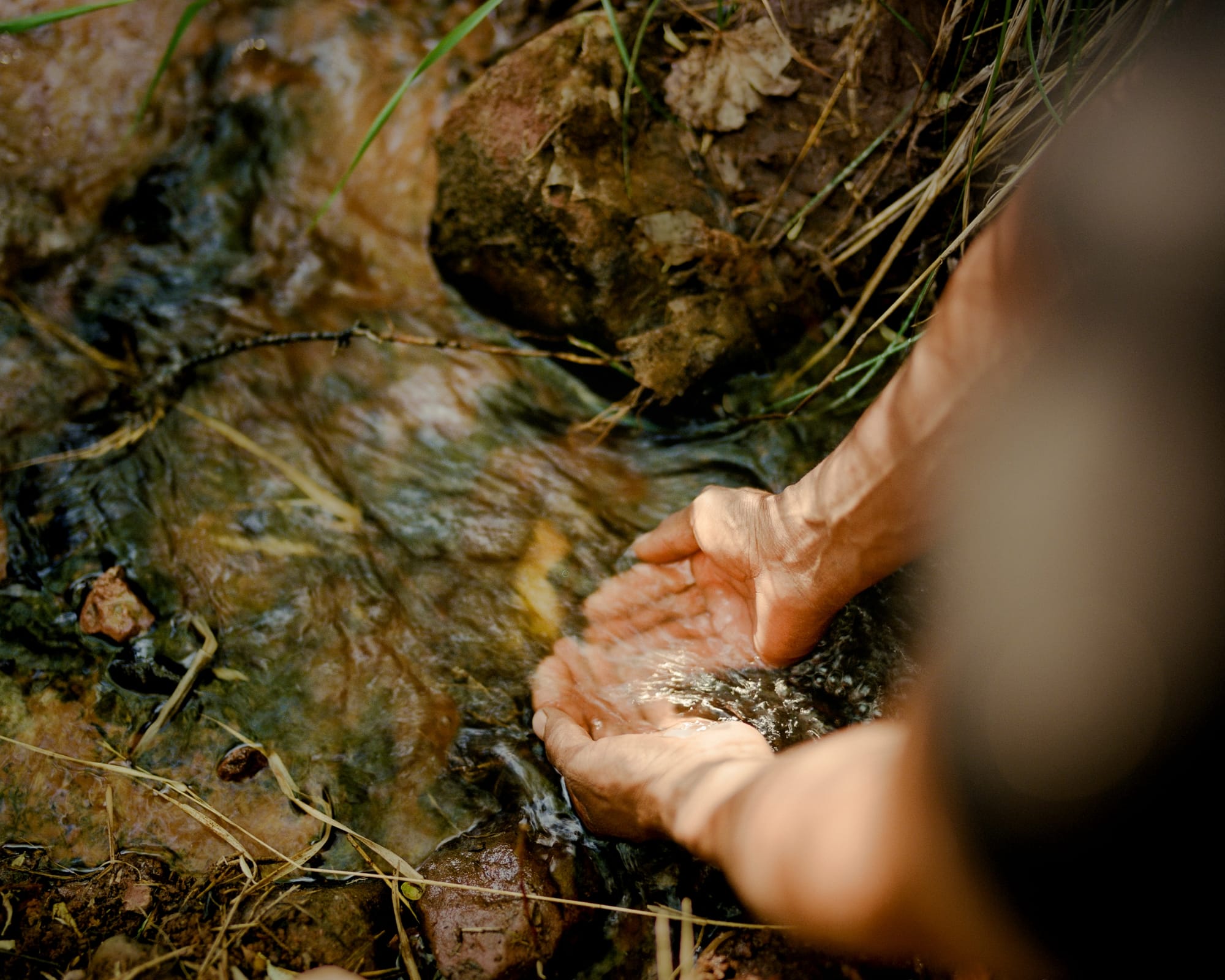
What would reverence change in public land management? What if reverence were a starting assumption alongside science, policy, and economics? This could mean taking only what landscapes can sustain, and protecting quiet, darkness, water, and the fertility of wild beings. Respecting sacred and historically important places, including archaeological settings, heroic battlefields, and routes of epic journeys. What if we recognized responsible grazing, hunting, and recreation as relationships to places, rather than threats? What if we asked what condition we intend to leave the land in 50 or 100 years? We should also understand that reverence won't automatically dictate a policy outcome. It simply changes the questions decision makers ask. Instead of asking, “What is permitted here?” we ask, “What do these places require of us?”
Given the national mood in these divisive times, I do not expect reverence to yield harmony. Tribal nations, county commissioners, state and national lawmakers, hunters, and outdoor recreationists will continue disagreeing. And reverence won’t eliminate those disputes. But it could establish a better moral ground beneath the political ground. Without it, we will continue to argue so much about roads, grazing levels, monuments, mining, energy development, and access, that our competing interests will eventually exhaust the limits of the places we are competing over.
Reverence is that pause: a deep breath and an exhale that brings forth humility, restraint, and obligation. It is the illuminating moment that leads us to knowing the right thing to do.
A child fifty years from now won’t care much about which political side prevailed in 2026. What will matter to that child is whether the stream still flows, fish can still be caught, night can still be dark, ancestral places remain intact, and people can still encounter landscapes that make them feel small.
I hope the future of public lands begins with an old understanding: Land and water are not something we manage; they are first what makes life worth living.
The Forum
Inspired by Jim Enote's essay? Share what our public lands mean to you — and what you owe them in return.
Share your perspective


