

It was November 18, 1889, and Elisha Ferry was already in trouble.
He was the newly elected governor of the newly formed State of Washington, and he was standing before a crowd on the steps of the capitol in Olympia, delivering the state’s first-ever inaugural address.
Washington “enters the Union well endowed,” Ferry told the crowd. “With resources superior to those of any other equal area…. The general government welcomes us into the Union with munificent endowments of lands.”
But despite the pomp and circumstance, and the crowing about wealth and prosperity, Ferry knew that his new state—land rich but cash poor—was struggling with an essential question, a question that would come to define the next 137 years of land and forest management in the Evergreen State.
Who does all this land belong to? What purpose should it serve? And what is a forest’s true value? These questions—how to balance the needs of both Washington’s people and its lands, of ecological stewardship and economic necessity—would vex the state’s leaders for generations.
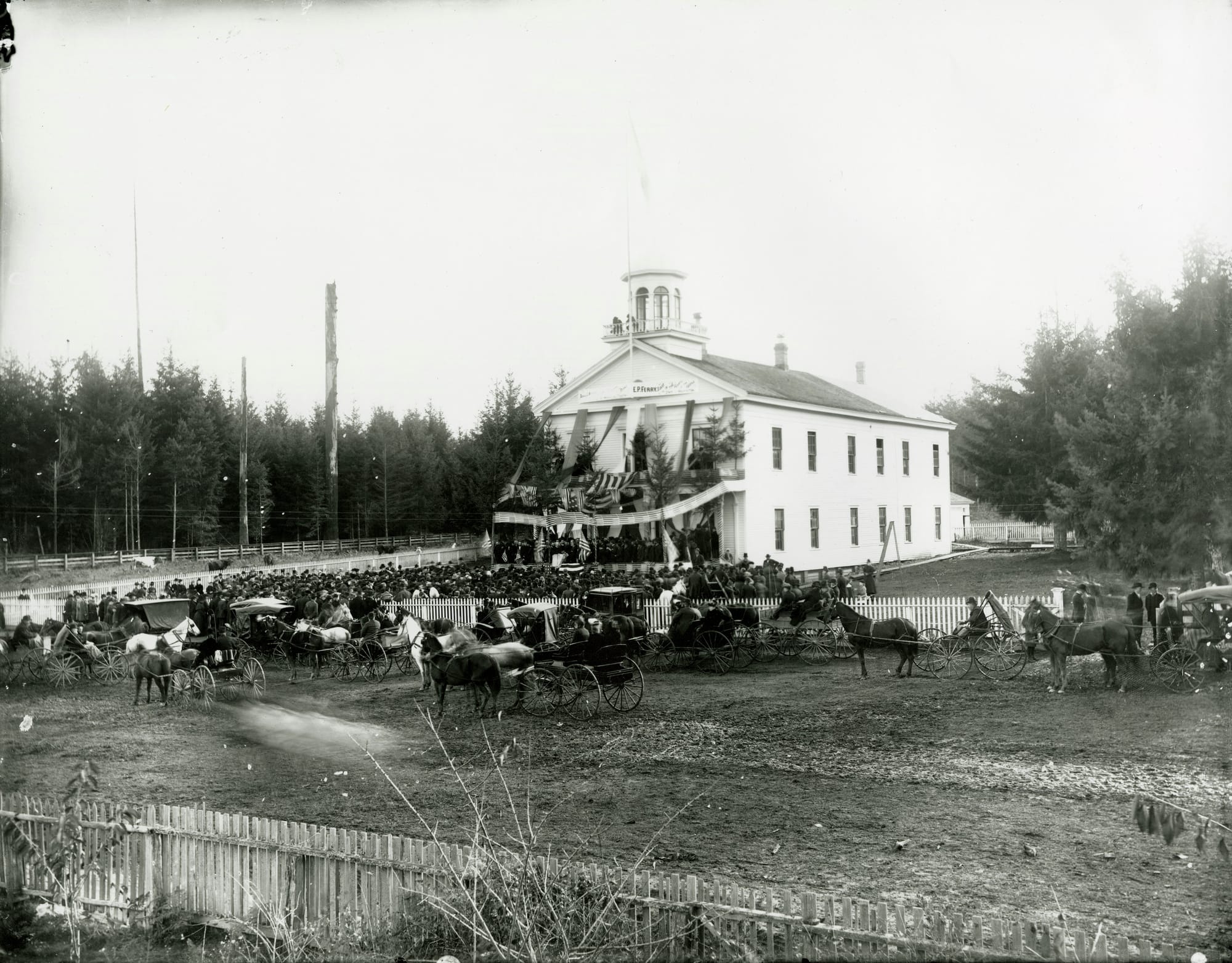
When Congress conferred statehood on the Washington Territory in 1889, it granted the fledgling state over three million acres of land in trust to generate long-term funding for public schools and universities. Established by the Enabling Act of 1889 and enshrined in Washington’s new constitution, this trust land system formed the spine of the state’s land-management policy.
Soon, those state lands began to grow as, in the 1920s and ’30s, counties transferred swaths of land to the state for the same purpose. The mandate was clear: “These lands must be used to make money for the people.”
The system reflected the assumptions of its era: that forests and other resources were abundant, and extraction could continue indefinitely. It gave little weight to Indigenous stewardship or ecological limits.
But we know more now.
Decades of extraction and of treating natural resources as inexhaustible have depleted forests and other resources, bringing us to a turning point. Our forests are shrinking, water levels are rising, and critical habitat and ecosystems are disappearing. Climate change is intensifying drought and wildfire.
Who does all this land belong to? What purpose should it serve? And what is a forest’s true value?
What do we do now with our state trust lands? The answer to that question will shape the future of land and forest management in Washington—and across the country.
For nearly two years now, I have had the privilege of serving as Washington’s Commissioner of Public Lands and leader of the state’s Department of Natural Resources (DNR). The agency is staffed by more than 2,000 people working on the front lines of our state’s most urgent environmental challenges across the 5.6 million acres of lands, waters, and forests under our care. I ran for this job because I believe we need to change how we manage our forests, especially our most critical ones.
These structurally complex forests—also known as “legacy forests”— provide essential habitat for thousands of species, store and sequester millions of pounds of carbon, and support the biological diversity and resilience of our lands and waters. Unfortunately, in addition to being our most ecologically valuable forests, they are also our most economically valuable, and as a result, we’ve been cutting them down for decades.
Under our current state trust land system, DNR must manage our land to generate revenue for the trust’s beneficiaries. These include public schools and universities, as well as counties, ports, libraries, and fire districts across the state. DNR generates millions of dollars each year—largely from timber sales—that go directly to these beneficiaries.
Timber revenue is also a key part of the agency’s budget and how we do our work—which includes not only timber sale operations, but forest health and resilience treatments, forest informatics, silviculture, habitat conservation efforts, and much more. In recent years, however, that revenue has remained flat—or even dropped—while our costs have consistently risen, driven by a difficult combination of inflation, flat forest-management fees, and a volatile timber market rocked by tariffs and falling prices.
As a result, we’re losing money, and the accounts we rely on for our forestry work are headed into the red. This is a serious structural problem that has robbed us of the resources we need to do our work and the flexibility to pursue our conservation goals.
The system reflected the assumptions of its era: that forests and other resources were abundant, and extraction could continue indefinitely.
In August 2025, I signed a Commissioner’s Order to manage 77,000 acres of structurally complex forests differently, allowing us to pursue innovative, diversified management practices that generate both revenue and ecological benefit. But I have learned since then that managing these critical forests differently isn’t possible without first developing new tools to generate revenue.
While federal funding cuts—combined with deep, state-level budget reductions—have helped drive our state and this agency into this difficult financial position, the real challenge is structural: The status quo business of forestry in Washington has been pushing us toward a financial crisis for over a decade.
We must change how we do business, because the current model is broken. Our trust land system gives us established ways to produce income from timber, but no comparable way to generate revenue from the carbon, habitat, and watershed benefits these forests provide.
We need to give conservation a financial value—not just an ecological one. We need conservation to bring new resources into our system, and we need durable tools that can protect critical forests while meeting our responsibilities to communities across the state.
This isn’t just a Washington state issue; it’s a nationwide call to action for every state and federal agency dedicated to the stewardship of our lands and natural resources. It’s time to develop and implement the tools we need to generate revenue in truly sustainable ways, to put an end to the age of endless extraction and focus instead on managing these lands for the benefit of people and place, conservation and community.
We must change how we do business, because the current model is broken. We need to give conservation a financial value—not just an ecological one.
Last month, I announced a new vision to develop those tools here in Washington.
First, we are drafting a new policy for conservation easements that will enable Tribes, agencies, conservation organizations, and other partners to purchase durable protections for specific forests that would span the length of a timber harvest and regrowth cycle—about 50 years. This would allow us to continue fully compensating our trust beneficiaries while allowing forests to continue providing habitat, carbon storage, watershed protection, and climate resilience.
Second, we are asking the Washington State Legislature to grant DNR authority to enter appropriate forests into the regulatory carbon market, allowing us to generate revenue through selling carbon credits and improved forest management practices.
Third, we are seeking substantial and dependable state investment in forest conservation by utilizing DNR’s Trust Land Transfer (TLT) program more aggressively and calling on the Legislature to provide robust funding through Washington’s Natural Climate Solutions Account (NCSA) to protect forests with high carbon, habitat, and climate value.
The TLT program, funded by the Legislature, enables DNR to move economically underperforming trust lands with high ecological value into conservation, recreation, or other public uses, while funding the purchase of replacement trust lands to maintain long‑term revenue for trust beneficiaries.
The NCSA, established by our state’s Climate Commitment Act, directs funds from the state’s cap-and-invest program toward projects that leverage natural systems to reduce greenhouse gas emissions and improve climate resilience.
Finally, in the years ahead, we will stabilize funding to manage and expand our Natural Area Preserve and Natural Resource Conservation Area programs—vital tools we can and must use more aggressively to identify and protect areas of high ecological value.
Collectively, these new measures will allow us to innovate and diversify our forest management and pursue conservation at scale. But while these new tools will help, they cannot fully address the need for lasting, systemic change—a need that grows more urgent by the day.
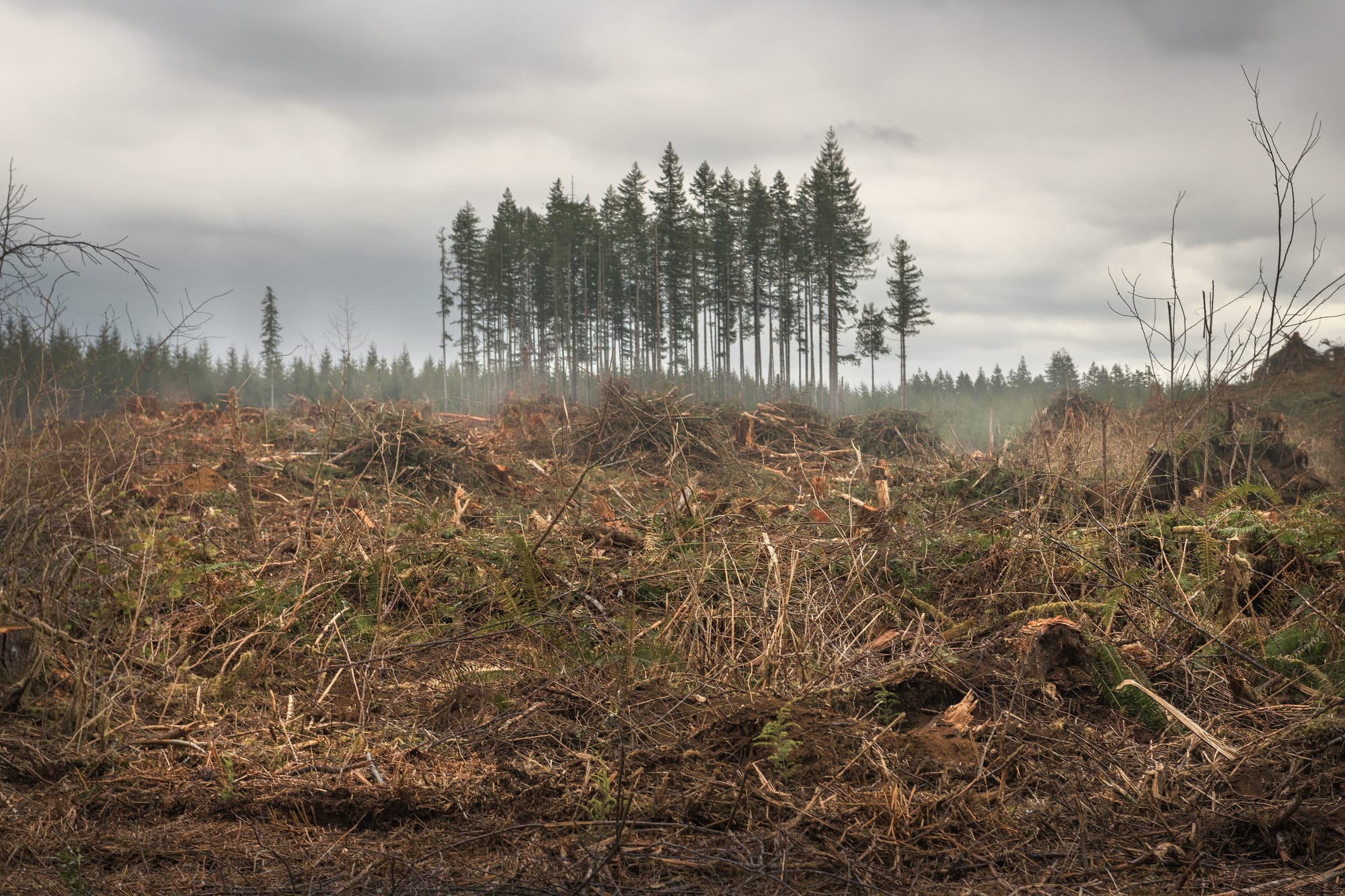
We must reach the point where the value of a forest is measured not only by the timber it can provide, but also by the carbon it stores, the habitat it fosters, the water it protects, and the resilience it gives to the surrounding landscape. I want that recognized not just in our hearts, but in our laws and on our balance sheet.
We must hold true to our conservation values, while recognizing that values alone will not protect a single acre. They must be bolstered by action.
The question at the heart of Ferry’s story—what is this land worth, and what value should it provide?—still shapes Washington’s land policy. But our circumstances have changed, and so has what we know about the consequences of extraction.
It’s time to put an end to the age of endless extraction and focus instead on managing these lands for the benefit of people and place, conservation and community.
In 1889, more than 60 percent of Washington state—over 27 million acres—was forestland. Today, that number stands at less than 20 million acres, meaning that, for the first time in our history, less than half of the Evergreen State is forested.
At the same time, rivers across the state have shrunk, and entire landscapes have dried out. This winter, we experienced some of the lowest snowpack we have ever seen. This spring, we announced a record fifth-straight year of drought conditions, and this summer, we weathered our worst wildfire season in decades.
This story repeats across the country, in every state and across every region.
Heat waves broke records across the country this summer. Massive floods hit Texas, Virginia, and Ohio. Communities across Southern California are still recovering from the devastating January 2025 wildfires. As the climate crisis accelerates, so does the cost, and so too does our urgent need to rethink and reform our aging land-management systems.
