
The Forum
The Forum is a space to put forward ideas for a brighter future for our public lands, waters, and the communities that depend on them. Share some writing, a photograph, original artwork, or a video. Imagine what the future could look like. Respond to a question or a discussion topic. Vote for the ideas that resonate most with you, or write in with a constructive counterpoint or addition to a perspective you've read here. Dig in.
The Forum is one way Ground Shift is building a people's plan public lands — an ambitious vision and policy roadmap drawn from ideas, conversations, and gatherings across the country. Your contribution will help shape that plan.
The Prompt
Imagine the future of America's public lands and waters, 25 years from now.
Here are some guiding questions to get you started. What is your biggest hope for our public lands and waters in 2050? What is the biggest challenge they will face? What will be the biggest change in how people value, use, or benefit from our public lands and waters over the next 25 years?
The Responses

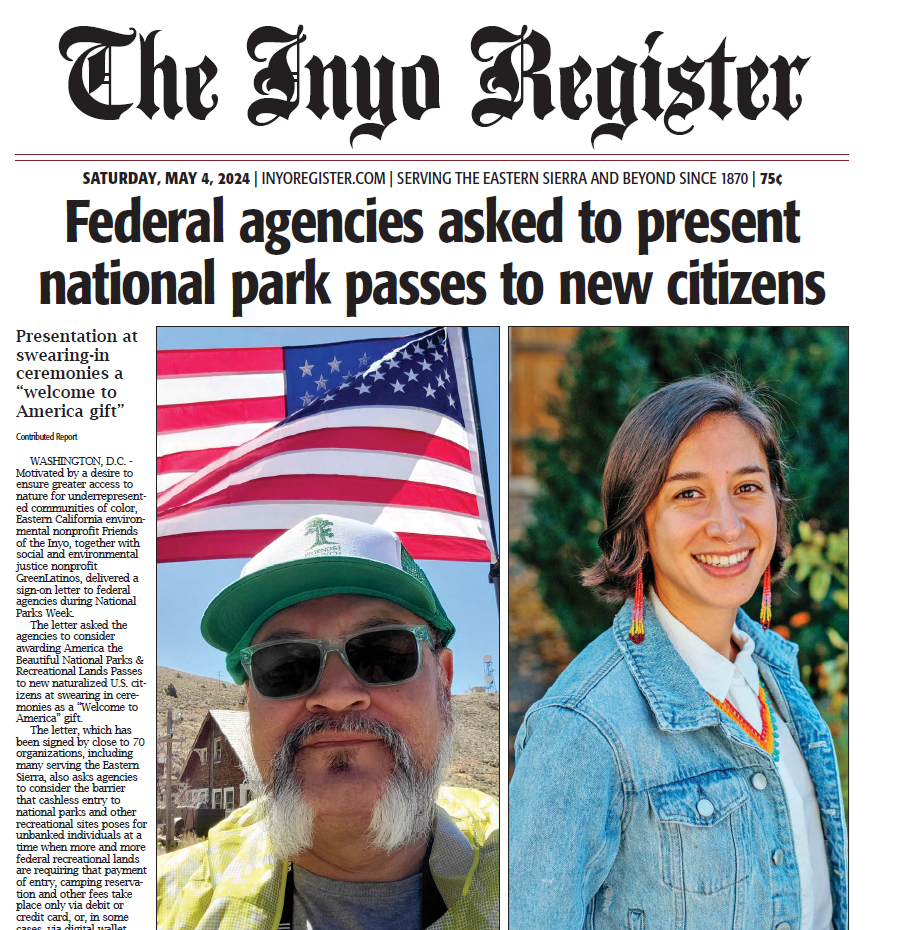
America The Beautiful National Parks & Federal Recreational Land Passes are gifted to newly naturalized citizens.
My hope for our public lands and waters in 2050 is that America The Beautiful National Parks & Federal Recreational Lands Passes are routinely gifted to newly naturalized citizens. That our National Park Service units, Forest Service group sites, BLM group sites, and National Wildlife Refuge visitor centers are honored by becoming a basecamp for naturalization ceremonies nationwide, where new citizens, as they take the Oath of Allegiance to the United States of America, and their loved ones are welcomed onto the places we steward for present and future generations. 25 years from now, my greatest hope is that America is truly a nation that honors its immigrant roots, providing a fair and accessible pathway to citizenship. And that this same pathway also leads to our public lands & waters.
Bipartisan
Hi:
The most important factor to keep in mind when arguing for public lands conservation is that this issue is bipartisan. This is something GOP politicians don't seem to understand: those on the political left and the political right enjoy our public lands. Everybody enjoys our parks and forests -- it is NOT a liberal issue.
It is thus critical to keep to keep progressive leftist/woke language and tactics out of the conservation movement. In other words, do NOT follow the example of the Sierra Club, which has become indistinguishable from the Democratic Socialists of America, BLM, or other leftist NGOs. That will doom the movement.
Public lands conservation is one of the best things about America. Let's keep it positive, patriotic, and bipartisan!
Public lands should never be used for private profit.
The earth's lands and waters should not be owned. Resource extraction must be done respectfully, and not for private profit. Yeah, radical.
No grazing of animals to kill and eat. No hunting so men can feel virile.
Leave the lands and waters to run themselves. Keep human desires small. We are the most destructive species EVER.
Quiet places to wander
People will walk away from vehicles to marvel at great old trees and steep rocky views and sparkling rivers. Sometimes, they will join a group to learn the origins, history, names of what they are seeing. The public lands will be stewarded to protect animals and plants, quiet dark skies, so that all may come and enjoy them. Waterfalls and thrush calls will be heard (not backup beepers on buses). There will be trail crews, still using shovels and saws (not powered tools). Beyond the precious core (National Parks and all Wilderness areas) miles of trails for full access by bicyclists will be maintained. And beyond the quiet areas, there will be small roads for motorized vehicles (up to 4 passengers).
Public lands should be fully protected, remain in the public domain and under public control.
There should be no land sales or leases, no corporate (or for profit) use, no mining or drilling or data centers. Lands shall be maintained in proper and good condition and remain available for appropriate public use. Protected lands and environments should remain protected, especially "wilderness". All staffing should be restored to easily meet good condition requirement and include full public protection and education. Full fire fighting capability should be maintained. More public land should be added, especially contiguous areas. Private contiguous land should have judicious and publicly controlled uses. Public lands should be fully protected, remain in the public domain and under public control.
I am hopeful for rewilding efforts and terrified of continued development.
I hope for a future grounded in sustainable farming, responsible development, and a renewed commitment to native plants and the protection of wild places and places that should return to be wild. I worry about the continued loss of biodiversity to aggressive non‑native species, the decline of soil health, and the steady conversion of land driven by development and greed. I envision more land being purchased and safeguarded by individuals, land trusts, and nonprofit organizations acting as true stewards. Our Native peoples know this land more deeply than anyone; we should honor that knowledge, listen, and act with urgency. The future of humanity depends on protecting the Earth. We must reconnect with nature, respect our environment, and recognize the intrinsic value of the planet—not as a resource to exploit, but as our home.
Long term progress and uniting in shared lands.
That our public land managers can be freed from the extreme pendulum shifts of our politics and make progress on clear long term goals. That the public can learn to share with other owners and let go of absolutist objectives for their public lands. These shared lands can and should be a source of unity and we all must be able to see our interests reflected in how they are cared for and used. Land owners have responsibilities, including to not only recognize the interests of others, but also to be willing to champion them so that the constituency that has kept them through our history will grow, not shrink.
A green and blue framework around which America can create a healthy and sustainable future
A Green and Blue Framework of Conserved Lands and Waters
Public lands should create a permanent and, where possible, connected green and blue framework across the U.S. (in urban and rural areas and in the east and west) around which Americans can build and maintain healthy and prosperous communities. That framework should consist of a coordinated system of federal, state, local, and non-profit conservation lands and waters, as well as privately owned lands with conservation restrictions, that are managed sustainably for agriculture and forestry uses.
Taken together these lands will provide: habitat that is resilient to climate change for the whole range of native plant and animal species, access for enjoyment of the outdoors for all Americans, protection of water supplies for nature and people, storage of carbon, insulation from natural hazards, management of urban development, and the preservation of Tribal and other sacred and beautiful places that are meaningful to American history and culture.
While serving different purposes, public lands should be acquired, managed, and stewarded for their appropriate uses at functional scales with a long-term perspective, through coordination among landholding agencies and in ways that are informed by conservation science, traditional knowledge, and the full engagement of the diversity of stakeholders and rightsholders.
Acquired and managed in this way, a green and blue framework of public lands and waters will require increased public investment, but the long term documentable benefits of the framework will far, far outweigh the costs.

The In-Between Time is the institution-building era of conservation.
My biggest hope for America's public lands and waters in 2050 is that we have built the democratic capacity to conserve and steward them for generations. Conservation should not be something government does for people, but something people do with one another through durable, collaborative institutions.
The greatest challenge isn't only climate change or biodiversity loss. It's institutional fragility. The dismantling of the Bears Ears Commission showed how years of collaborative conservation can be undone by political change. If every election can unravel decades of relationship-building, then our conservation system isn't designed for the long horizon that biodiversity requires.
That challenge is one of the central themes I explore in my forthcoming book, "Designing Nature's Half": how we collaboratively design landscape-scale conservation decisions, and the durable institutions needed to steward those decisions across generations.
The biggest change I hope to see is a shift in how we think about conservation itself.
This is the In-Between Time. We know the future we hope to achieve by 2050. The question is not only what landscapes we hope to conserve, but what collaborative, democratic institutions we must build between now and then. As governments and priorities change, citizens, Tribal Nations, landowners, scientists, businesses, and civic organizations must sustain the long-term collaborations that conservation requires.
If we truly embrace the Kunming-Montreal Global Biodiversity Framework's vision of "living in harmony with nature by 2050", conserving landscapes is only part of the work. We must also build the collaborative institutions capable of stewarding them across generations.
Learn the lessons of traditional cultural practices in preserving common ground, water and places of the "heart".
New Mexicans get this - we have been ground zero for uranium, oil and gas extraction for over 100 years, we have been the testing ground for the bomb, we have the least amount of water in the USA and we have one of the largest land masses and highest level of wildlife diversity in the country. We are a big state with clear horizons, dark skies and astounding landscapes - all that is changing with data center proposals, hyperscale military weapon manufacturing and testing companies, expansion of Los Alamos National Lab plutonium pit production, and ongoing wildfire destruction. None of these changes will end the core strength of communities however. We must curb climate change though. Reliance on fossil fuels is an impossible future. We are making our planet uninhabitable, but in the long "meanwhile" we must turn to solar power, reduce our water extraction and curb our waste and consumerism. Our public lands are largely sacred lands - protected for their importance as places of reverence, abundance, defense, water and beauty. Communities, cities and the mega-tropolis should learn from 1000's of years of pueblo living and have a "green heart" that protects their public water source, provides nearby fields for growing, dairy and gardens, provides water for the natural trees and vegetation and restricts "landscaping" to maintain native plants and wildlife. Nature provides the best "plant list" and people need to adapt. Public lands too. Fewer roads, signs, visitor "facilities". Provide horse-wagon tours, hiking, climbing. Protect the wilderness.
Half of North America in cattle-free designated Wilderness.
Half of North America in designated cattle-free Wilderness.
More than anything, it's a structural problem...literally.
My biggest biggest hope for our public lands and waters is that more of us grow to understand the root challenge so we can confront it more effectively.
From my perspective, and I tried my best to convey this in my Ground Shift essay, the root of the issue is that the foundation upon which our socioeconomic systems are built has become structurally compromised. More than a social or even an environmental problem, it's fundamentally a physics problem caused by the unsustainable transformation, transfer, and concentration of capital/resources, including natural capital.
As a result, nature, which is the aforementioned foundation, is becoming impoverished along with entire communities of people, both rural and urban. Not only do we all pay the price, but in our attempts to confront the issue, we exacerbate it by allowing ourselves to be fooled into thinking tribally instead of systemically.
I believe the key is for many more of us to understand and see the issue for what it is: a structurally compromised socioeconomic/environmental system in need of an overhaul of the systemic mechanisms that dictate how capital, in all its forms, flows and is distributed.
As an example, a world that prioritizes the development of resource-hungry data centers over access to affordable electricity and sufficient water for communities puts its structural integrity at risk.
By the way, I really appreciate the point in Amanda John Kimsey's Ground Shift essay about connecting conservation to kitchen table issues.
2050
By 2050, will there be more or fewer public lands and waters? People will have to care more to get things done that are important to the future of public lands and waters. While people might not know what to do, it is their responsibility to teach their children and grandchildren to care and work for the future of public lands and waters. This will and should require more education and training, which is good because that may result in jobs/professions that need to be developed. This is exciting because college students may be confused about finding jobs/professions in the future, and, students will demand universities and colleges offer opportunities.

A shared vision of adaptive resilience
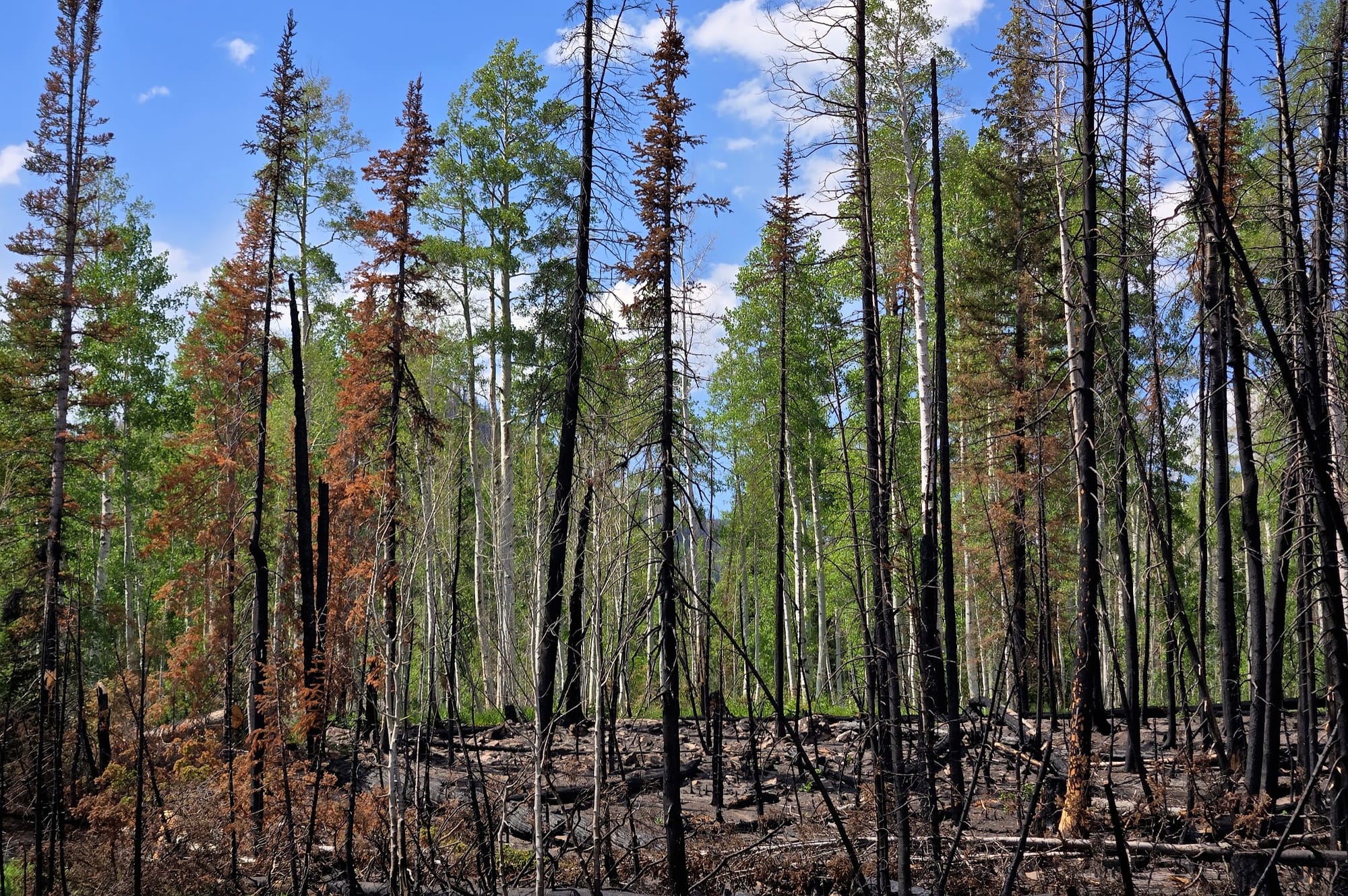
My hope for the next 25 years is that conversations around wildfire will shift toward a shared vision of adaptive resilience. Those who view it as simply a fuels issue will understand the need to address and adapt to a warming climate. Those who view it as simply a climate issue will understand that proactive land management is necessary. The ecological benefits and risks of fire will be better understood by researchers, policymakers, and the public. Land managers will have the funding and resources to go above-and-beyond triage fuel treatments to address systemic and regional issues. Restoration of aspen stands and riparian areas will be prioritized to grow shaded fuel breaks, while enhancing biodiversity, groundwater recharge, and net carbon storage. Federal, state, and local agencies will truly work together for shared stewardship goals without falling into a power grapple.
The challenge we face is overcoming a media and political landscape which often prioritizes blame or fear to drive positions, rather than focusing on shared interests. An adaptive resilience approach is not just a management strategy, it is a cultural change that will require each of us to work together.
Sustainable living & working with reduced energy demand
Human greed is killing our planet. We must learn to thrive in a less energy-intensive manner. How? Instead of taming/overcoming nature, we need to work with nature to curtail the damage we have done to the planet. Natural systems tend toward homeostasis in the absence of negative influences, so let's stop (reduce by 50%) polluting our air and water. Nature sequestered carbon out of the atmosphere and into the crust as oil and methane; we should just leave it there.
The greed of fossil fuel industries is the only impediment to our transition to renewable energy. Market forces such as a carbon tax were not a viable solution as long as lobbyists were able to buy legislators. Today, as GHG emissions drive global warming past the +1.5 C tipping point, we can't afford to wait for gradual reductions. Rather, we must adopt revolutionary reform to have any chance of slowing climate change. This will not be easy & it will require personal sacrifice. However, the status quo is driving us quickly toward an uncomfortable future - "natural" disasters, sea level rise, the 6th mass extinction, mass migrations. The choice is ours and the time to act is now. The fossil fuel industries can either switch to renewables or go out of business.
The plastics industries are another problem. Single use plastics are convenient, sure, but they are ultimately polluting our global water systems. They can all be replaced with glass or paper. Again, it's a consumer choice.
An Evocative Vision for Public Lands
Three mileposts to guide the future of America’s Public Lands
(1) Focus on critical environmental services
Attention on the goals associated with public lands have emphasized a very narrow interpretation of utility: the extraction of marketable resources (timber, minerals, forage) to support a market economy to meet an ever-expanding portfolio of human demands. This emphasis, under the rubric of “multiple use,” devalues the irreplicable services and ecological processes natural landscapes supply. Based on the most apparent, critical threats to sustaining life-supporting conditions for all biota, public lands could prioritize three outcomes: (a) The maintenance of cold, fresh water; (b) The protection of biodiversity; and (3) The management of the planetary carbon budget. These three attributes can even be characterized as “utilitarian,” as without their maintenance, other systems that support human economies and well-being will eventually collapse. Since most public lands are located in the western United States, aggressive reductions in forest stand densities from years of fire exclusion require woody material to be removed from the forest. This will mitigate wildfire carbon release and allow carbon to be stored in usable forms.
(2) Develop a long-term transition strategy on human uses of America’s grasslands
The most degraded of America’s public lands are grasslands. Although our history and culture emphasize cattle grazing as a public good, both rural people and the land would benefit from a transition from traditional cattle operations to other types of grazing systems as well as other herbivore species. Recognizing that rural populations and ranching operations have a profoundly important role in designing any transition, the dual goals of vital grasslands and vital rural economies are not incompatible. The current economic incentives are not working for rural families, as consolidation of markets keeps margins low and risks high. A complete rethinking of grassland management is long overdue.
(3) Abandon the current system of funding land management agencies and trust resource professionals to identify budgetary needs and priorities
The development and approval of budgets for land management agencies creates unbridgeable dissonance between what could happen on public lands and what is required of land managers. The handing down of “targets” from above reflects mostly the power of interest groups and little of the dynamic needs of the land. The lack of trust in federal land managers that emerged after agency capture by commodity interests in the middle of the 20th century continues, even if it is no longer relevant. Today’s resource management professionals are keenly aware of local needs and feasible management opportunities. They can capably identify their budgetary priorities and even be realistic within a certain set of parameters. Mangers can be far more effective, especially in protecting the critical services of water, biodiversity, and carbon budgets, if they can independently identify budget needs that coincide with realistic implementation timetables.
The investment costs may seem high, but compared to the costs of the status quo – drought driven mass migration, violent climate disasters, and the loss of a millions of years of evolution – this is a bargain.
Ground Shift isn’t enough. We need a Tectonic Uprising
If we’re serious about the scale of the moment, we need to be bold.
An effort called Ground Shift should, by definition, move the ground.
Instead, much of the public lands advocacy world still seems trapped in the gravitational pull of the way things have always been done and Beltway strategies, Beltway language, Beltway assumptions—and too much deference to the political establishment.
That’s not going to transform a broken system.
We need a Tectonic Uprising. It starts with the grassroots and communities that rely on public lands. Go to the trailheads, river put-ins, campgrounds, hunting camps, climbing areas, mountain towns and rural communities to listen.
Listen to what they value.
Here’s another uncomfortable truth: not every acre of public land is equal.
We should stop pretending that every parcel needs to be treated the same way simply because it carries a federal ownership designation. Some places are extraordinary—ecologically, culturally, recreationally, spiritually—and deserve permanent protection. Other lands may have very different values and appropriate uses.
A 21st-century public lands vision should be ambitious not constrained by the lowest common denominator of what Washington thinks is politically possible.
And we shouldn’t fall in line behind limousine-establishment Democrats who tell us that nature is nonpartisan and working across the aisle is the only responsible path forward.
Nor should conservation organizations define success by how modestly they can ask for change.
Ground Shift is a decent start.
But if we really want to change the landscape, we need a Tectonic Uprising.
Not evolution. Revolution.
Vision 2050: Reinforcing the Endangered Species Act Through Dynamic Climate Adaptation and Ecocide Law
By 2050, my ultimate vision for our public lands and waters is a restored, climate-resilient network of ecosystems where policy explicitly prioritizes non-human species' right to thrive. Achieving this requires transforming habitat protection from static, reactionary rules into dynamic adaptation and unyielding legal accountability.
Rapid, climate-driven habitat fragmentation coupled with corporate exploitation represents the single greatest threat to our public lands over the next quarter-century. While the Endangered Species Act (ESA) serves as a vital shield, its traditional tools—like static critical habitat designations—were built for an ecologically stable world. Shifting temperature zones and rising sea levels are forcing species beyond historical ranges, leaving ecosystems exposed before regulatory baseline data catches up.
To ensure the ESA successfully preserves biodiversity over the next 25 years, two structural legal tools must reinforce its framework:
Integrated Climate Adaptation: ESA consultations must legally mandate forward-looking spatial modeling and dynamic corridors, proactively safeguarding climate refugia and migratory pathways before degradation occurs.
Enforceable Ecocide Legislation: Recognizing ecocide—the severe, widespread, or long-term destruction of natural systems—as a prosecutable offense creates a decisive criminal deterrent against commercial degradation.
Over the next 25 years, societal valuation of public lands must shift from extractive exploitation toward intrinsic rights. Governance must recognize natural systems as essential infrastructure necessary for planetary survival. By strengthening ESA Section 7 mechanisms, mandating climate adaptation, and enforcing ecocide laws, we can secure a resilient, connected public trust for generations to come.